SCALE MODELS

AbyssWare provide a wide range of high quality commissioned scale models. Here can find some examples of my work

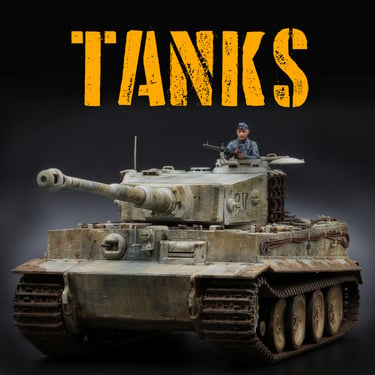
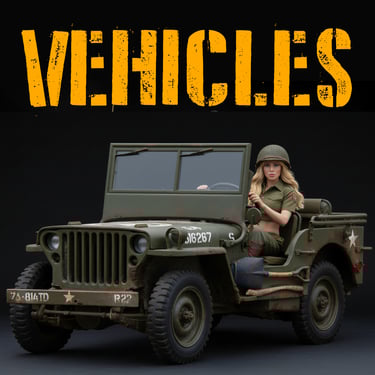
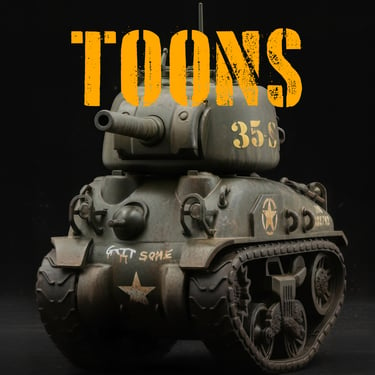
Military scale modeling is more than just a pastime; it’s a bridge between history and craftsmanship, a way for enthusiasts to hold a piece of the past in their hands. At its core, the hobby involves creating miniature replicas of military vehicles, aircraft, ships, and figures, often with painstaking attention to detail. But beyond the glue and paint, it’s a world rich with stories, artistry, and a deep respect for history.
The origins of scale modeling can be traced back to the early 20th century, when militaries used models for training and strategic planning. These early models were functional tools, not works of art. After World War II, however, the hobby began to flourish among civilians. Surplus kits and the rise of plastic manufacturing made it possible for anyone to build their own miniature tanks or aircraft. Companies like Airfix and Revell became household names, and by the 1960s, scale modeling had become a global phenomenon.
What makes military scale modeling so compelling? For many, it’s the historical connection. Each model tells a story—of a battle fought, a technological breakthrough, or the men and women who served. Building a Sherman tank or a Spitfire isn’t just about assembling plastic parts; it’s about understanding the context in which these machines operated. Modelers often spend hours researching camouflage patterns, unit markings, and even the weather conditions of a specific campaign to ensure accuracy.
But history is only part of the appeal. There’s also an undeniable artistic element. Painting and weathering techniques can transform a plain plastic kit into a lifelike miniature. Subtle shading, chipped paint, and mud splatters bring these models to life, creating the illusion that they’ve rolled straight out of a battlefield. Some enthusiasts take this a step further by building dioramas—small scenes that capture a moment in time, complete with terrain, figures, and atmospheric details.
The tools of the trade have evolved dramatically. While a sharp knife, glue, and a few brushes were once enough, today’s modelers have access to airbrush systems, photo-etched metal parts, and even 3D-printed components. These innovations allow for an unprecedented level of realism. Entire communities have sprung up online, where builders share techniques, showcase their work, and even compete in international contests.
Interestingly, the hobby has also embraced modern technology in unexpected ways. Digital modeling and 3D printing have opened new possibilities, enabling enthusiasts to create custom parts or replicate rare vehicles that manufacturers don’t produce. Augmented reality apps are even being developed to help modelers visualize paint schemes before committing to them.
Despite these advancements, the essence of the hobby remains unchanged: patience, precision, and passion. Building a military scale model is a slow, deliberate process. It requires focus and attention to detail, qualities that many find therapeutic in an age of instant gratification. For some, it’s a solitary pursuit; for others, it’s a social activity shared with clubs and online communities. Either way, it’s a hobby that rewards dedication and creativity.
Military scale modeling is not just about miniatures—it’s about preserving history, telling stories, and expressing artistry. Whether you’re recreating a famous battle scene or simply enjoying the quiet satisfaction of assembling a tank, the journey is as rewarding as the finished piece. In a world that moves ever faster, this timeless craft offers a rare opportunity to slow down, learn, and create something truly meaningful.
The Art and History of Military Scale Modeling
Bringing History to Life - One Model at a Time
© 2026 AbyssWare Studio. All rights reserved