
TANKS… JUST TANKS
Scale Models
"If the tanks succeed, then victory follows."
-- Heinz Guderian
A Century of Steel, Speed and Shock
Few machines have embodied the paradoxes of modern warfare like the tank. Heavy yet mobile, blunt yet precise, intimidating yet technically delicate, tanks have shaped battlefield outcomes and strategic thinking for more than a century. Born from the stagnation of trench warfare in World War I, tanks fused three military virtues- firepower, protection, and mobility- into a single platform designed to break deadlocks, shock opponents, and exploit breakthroughs. Over time, tanks have become more than just tracked cannons; they are networked sensor nodes, systems-of-systems with active defenses, advanced armor sciences, and complex logistics wrapped around a crew tasked with making fast decisions in hostile terrain. The tank’s story is part technological evolution, part doctrinal revolution. Early machines rattled across cratered mud at walking speed; modern main battle tanks (MBTs) can fire precisely while moving, network with drones and artillery, and defeat incoming missiles with active protection systems. Yet, contemporary battlefields also raise profound questions. Precision top-attack missiles, loitering munitions, and pervasive sensors threaten heavy armor in ways inconceivable even 20 years ago. Is the tank still decisive-or merely a costly survivor? As we trace tanks from the rhomboid pioneers to semi-autonomous, actively protected MBTs, a central truth emerges: the relevance of tanks has always depended on combined arms, adaptation, and the interplay between weapons, countermeasures, and doctrine.
Origins: Breaking the Trench Deadlock (1914–1918)
Tanks originated as an engineering solution to a tactical impasse. In World War I, barbed wire, machine guns, and deep trenches rendered frontal assaults catastrophic. Armies needed a vehicle that could cross trenches, crush wire, defeat small-arms fire, and support advancing infantry. The British delivered the first operational answer with the Mark I in 1916-boxy, track-wrapped, and painfully slow, but conceptually revolutionary. Its tracks distributed weight over mud; riveted armor resisted rifles and shrapnel; and its sponson-mounted guns provided trench-clearing fire.
These initial tanks were mechanically fragile and terrifying to operate-hot, loud, fume-filled, and prone to breakdowns. Yet even when they failed to deliver decisive results, they demonstrated a new form of combined arms: infantry advanced behind mobile armor while artillery suppressed defenders. The French refined the concept with the Renault FT, a light tank that introduced a fully rotating turret housing the main weapon-an insight that would define future tank design. The Whippet and other “medium” tanks experimented with speed to pursue breakthroughs once the line was pierced. By 1918, the conceptual promise was undeniable: tanks could spearhead assaults, protect infantry, and change the geometry of battle. The postwar years would crystallize those ideas into doctrine-or, in some militaries, neglect them until it was almost too late.
Interwar Experimentation: Ideas, Suspensions, and Strategy (1919–1939)
The interwar era was a laboratory for both hardware and theory. Engineers explored suspension systems (most notably the Christie suspension) that permitted higher speeds and cross-country performance. Lightweight designs like the Vickers 6-ton influenced exports and derivatives worldwide; the Soviet BT series and T-26 showed the diffusion of ideas and industrial capability. Meanwhile, the conceptual groundwork for mechanized warfare took shape. Thinkers like J. F. C. Fuller and B. H. Liddell Hart in Britain, Heinz Guderian in Germany, and Mikhail Tukhachevsky in the Soviet Union debated how to employ tanks. Should tanks closely support infantry as mobile pillboxes, or operate as independent formations to penetrate and exploit operational depth? Different armies embraced different answers-and their choices shaped the early years of World War II.
Industrial constraints and treaty politics also mattered. Germany’s clandestine rearmament and Soviet industrial projects nurtured armored forces at scale. Britain and France, wary of another war and constrained by budgets, built capable tanks but often underinvested in modernization and operational doctrine. The stage was set for a conflict that would test every theory and every bolt.
World War II: Mass, Maneuver and Mechanization (1939–1945)
World War II transformed tanks from experiments into the decisive tools of maneuver warfare. In 1939–1941, German Panzer divisions-structured for speed, combined arms, and communication—employed tanks not as isolated attackers but as operational spearheads supported by motorized infantry, artillery, engineers, and close air support. Early Panzers (I through III) were not individually superior, but they were doctrinally integrated, enabling rapid breakthroughs and encirclements.
As the war progressed, tank design evolved quickly:
• Soviet T-34: Often called the most influential tank of the war, it combined sloped armor, a robust diesel engine, wide tracks for mobility in mud and snow, and excellent mass producibility. Up-gunned variants (76mm to 85mm) kept pace with rising threats. The heavy KV-1 and successor IS-2 brought formidable armor and firepower.
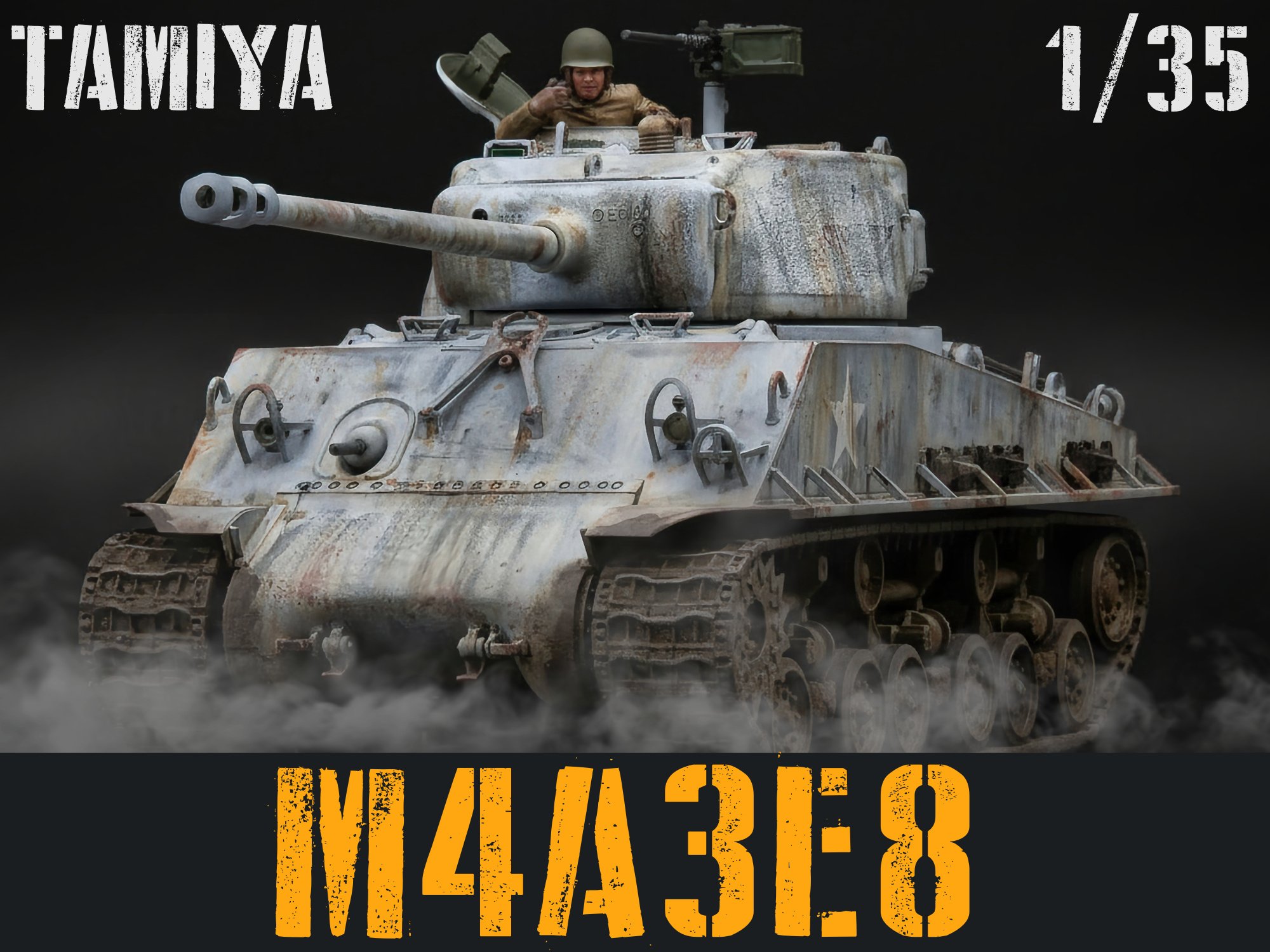
• American M4 Sherman: The Allies’ workhorse. Reliable, mechanically simple, and built in enormous numbers, the Sherman excelled in logistics and availability. Its armor and gun were outclassed by late-war heavy German tanks, but specialized variants (e.g., Firefly with a 17-pounder) and combined arms tactics mitigated disadvantages. Amphibious, flamethrower, and mine-clearing versions highlighted its versatility.
• British designs: The Matilda, Churchill, and later Comet showed a shift from infantry support toward high-velocity gunnery and better cross-country performance. British doctrines matured toward deep operations alongside the Americans.
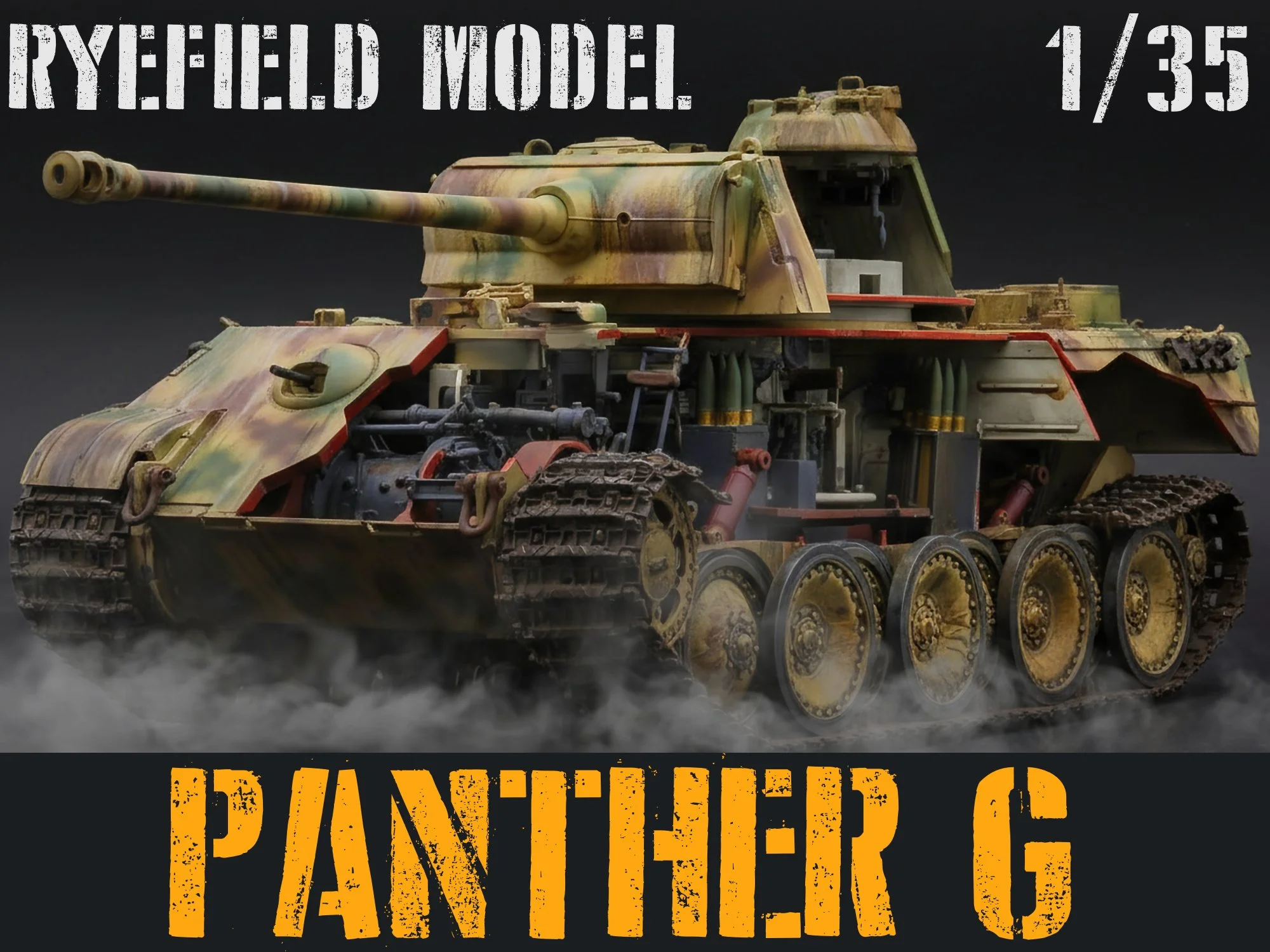
• German heavy armor: The Tiger I/II and Panther mounted powerful guns and thick armor, but suffered from complexity, high maintenance demands, and fuel constraints. At tactical ranges, their lethality was fearsome; operationally, their numbers and reliability lagged.
The war also diversified armored roles. Assault guns and tank destroyers (e.g., StuG III, Jagdpanther, M10 Wolverine) traded turrets for bigger guns or lower profiles, optimizing ambush and defensive roles. North Africa tested mobility and logistics; the Eastern Front became the ultimate armored crucible; and in the Pacific, dense terrain and limited roads reduced the tank’s influence, though infantry support roles remained important. By 1945, the lessons were stark: radios, logistics, and combined arms coordination mattered as much as armor thickness. Tanks were indispensable, but only as part of a broader mechanized ecosystem.
The Cold War: From Categories to the Main Battle Tank (1945–1991)
In the Cold War, technological leaps and doctrinal refinement converged into the concept of the Main Battle Tank (MBT) - a single class replacing the light/medium/heavy taxonomy. MBTs balanced mobility, armor, and firepower to dominate peer adversaries across varied terrains.
Key design trajectories included:
• Armor Science: Transition from cast and rolled homogeneous armor to composite arrays (e.g., “Chobham”-type), spaced armor, and eventually explosive reactive armor (ERA). The goal: defeat shaped charges and long-rod penetrators.
• Firepower Evolution: Guns moved from 90/100mm classes to 105mm, then 120mm smoothbore in the West and 125mm smoothbore in the USSR. Ammunition advanced from APCBC and HE to HEAT, HESH, APDS, and APFSDS long-rod penetrators. Autoloaders (common in Soviet designs) enabled smaller turrets and crews of three; Western tanks retained human loaders for reliability and burst handling.
• Sensing and Fire Control: Stabilized guns, laser rangefinders, ballistic computers, and eventually thermal imagers enabled accurate fire-on-the-move day and night. This was as transformative as any armor innovation.
• Protection and Survivability: NBC protection, blow-off panels, and improved stowage reduced catastrophic ammo cook-offs. Crew survivability became a design center.
Representative families illustrate the era: T-54/55, T-62, T-64/72/80 in the Soviet bloc; Centurion, Chieftain, Leopard 1, AMX-30 in Europe; M48/M60 in the U.S. The Centurion’s longevity and adaptability foreshadowed modern MBTs. The Leopard 1 emphasized mobility and gunnery over thick armor, anticipating the increasing value of “see first, hit first, don’t get hit”.
Operationally, armored warfare was tested repeatedly: the Arab–Israeli conflicts highlighted the strengths of speed, training, gunnery, and combined arms; the Indo–Pakistani wars showed maneuver on plains; the Iran–Iraq War underscored attrition and the dangers of poorly coordinated armor in prepared defenses. The Cold War also birthed a counter-armor ecosystem - ATGMs (e.g., Sagger, TOW), improved mines, and helicopter gunships—forcing tanks to adapt with ERA, improved optics, smoke systems, and tactics.
The Modern MBT: Networked, Protected, Lethal (1991–Present)
The 1991 Gulf War showcased a new level of sensor-fused, night-capable armored warfare. Western MBTs like the M1A1 Abrams and Challenger 1, equipped with thermal sights and advanced fire control, engaged at ranges and with precision unmatched by older systems. But the lesson wasn’t just hardware; it was training, doctrine, logistics, and information dominance.
Contemporary MBTs embody several pillars:
1. Advanced Armor and Modular Survivability
- Composite/ceramic armor stacks with non-explosive reactive armor (NERA) and ERA kits (e.g., Kontakt-5, Relikt) to resist both chemical energy (HEAT) and kinetic penetrators.
- Blow-out panels, protected ammo compartments, and spall liners mitigate internal damage.
- Roof and side augmentation kits, slat/cage armor, and multi-spectral camouflage address RPGs, mines, and increasingly, top-attack threats.
2. Active Protection Systems (APS)
- Hard-kill systems (e.g., Trophy, Iron Fist, Arena-type, Afghanit) detect and intercept incoming rockets/missiles.
- Soft-kill suites use laser warning receivers, smoke/obscurants, jammers, and decoys to degrade seekers and break kill chains.
- APS has shifted the survivability conversation from passive bulk to sensor-cued, layered defenses.
3. Gunnery and Ammunition
- Western 120mm (e.g., Rheinmetall L44/L55) and Russian 125mm smoothbores remain standard. APFSDS long-rod penetrators are primary anti-armor rounds; programmable multi-purpose HE and airburst rounds extend utility against fortifications and drones.
- Autoloaders vs. human loaders reflect design trade-offs: profile and crew size versus burst flexibility and redundancy.
4. Mobility and Power
- High power-to-weight engines (e.g., AGT-1500 turbine in Abrams; MTU diesels in Leopard) deliver rapid acceleration and sustained cross-country speed.
- Hydropneumatic suspension on platforms like K2 Black Panther and Japan’s Type 10 offers ride control, “kneeling,” and precision firing stability.
5. Sensing, Networking, and Battle Management
- Thermal imagers, independent commander’s sights (“hunter-killer”), laser rangefinders, and stabilized optics enable first-look/first-shot engagement.
- Digital battle management systems (BMS) integrate tanks with UAS, artillery, engineers, and EW, turning the tank into a node in a combined-arms sensor network.
- Data links and position-sharing allow collaborative targeting and faster loops from detection to engagement.
Notable contemporary MBTs include: M1A2 SEP variants, Leopard 2A6/A7, Challenger 2 (and upgrade paths), T-90M, Merkava IV (with Trophy APS), K2 Black Panther, Type 10, and Type 99A. Russia’s T-14 Armata concept highlights trends like unmanned turrets and armored crew capsules, though large-scale fielding remains limited.
The Urban and Drone Challenge
Modern conflicts have reiterated enduring truths: tanks dominate open terrain with combined arms but are vulnerable in dense urban areas without infantry, engineers, and overwatch. The rise of top-attack ATGMs (e.g., fire-and-forget systems) and loitering munitions/FPV drones adds a vertical dimension to survivability. Countermeasures include roof armor kits, APS tuned for steep profiles, electronic warfare against drone control links/GPS, rapid smoke with multispectral properties, and tactics (dispersion, deception, overwatch, counter-UAS teams).
The tank is not obsolete-but it is conditional: it thrives when integrated with reconnaissance, air defense, electronic warfare, engineers, and precision fires. When isolated, it is vulnerable.
Technology Deep Dive: Armor, Ammunition and Fire Control
To understand why tanks endure, it helps to see the co-evolution of threats and protections:
• Armor: Sloped, spaced, and layered armor raised the effective thickness without prohibitive mass. Modern composites mix ceramics, metals, and elastomers to disrupt jets and rods. ERA detonates outward to preempt shaped-charge jets; advanced arrays counter tandem warheads and reduce long-rod penetration via obliquity changes and shock.
• Ammunition:
- APFSDS uses dense penetrators (typically tungsten or depleted uranium) to defeat armor via kinetic energy and material mechanics at hypersonic impact speeds.
- HEAT focuses explosive energy into a metal jet; tandem charges counter ERA.
- HESH (more niche today) de-laminates armor via shock.
- Programmable multi-purpose rounds provide airburst against infantry and drones, breaching settings for walls, and precise fuzing for mixed targets.
• Fire Control: Stabilization across two axes, inertial/laser ranging, meterological inputs, and ballistic computers turn a 60–70-ton vehicle into a mobile sniper. Thermal imaging generations (from early FLIR to high-resolution uncooled sensors) revolutionized night fighting.
These components intertwine with doctrine: the side that integrates sensors, fires, and maneuver faster than the adversary tends to win, even if individual vehicles are less armored.
Logistics, Maintenance and the Human Factor
Tanks are not just weapons-they are logistical commitments. Fuel, track pads, road wheels, turbine filters, ammunition, replacement ERA tiles, and APS components create a demanding supply chain. A tank’s operational availability often defines its real-world impact more than its brochure performance. Robust maintenance echelons, recovery vehicles, and trained crews are decisive advantages; armies that can repair and regenerate forces faster maintain momentum.
Crew training and cohesion remain irreplaceable. Even with automation and BMS, situational awareness is a human art grounded in experience: reading terrain, coordinating with infantry and engineers, choosing positions, and understanding when to move, hold, or mask. The tank commander’s most potent weapon is often the radio, not the main gun.
The Future: Lighter Signatures, Smarter Protection and Human-Machine Teaming
Where do tanks go from here? Several trends are converging:
1. Signature Management and Energy
- Hybrid-electric propulsion promises silent watch, reduced thermal/acoustic signatures, and potentially better fuel economy. It could also power high-demand sensors and active defenses.
- Adaptive multi-spectral camouflage, signature shaping, and infrared suppression seek to degrade detection across the EM spectrum.
2. Bigger Guns, Smarter Ammunition
- Concepts like 130mm and 140mm guns aim to overmatch future armor. Improved APFSDS materials and smart multi-role munitions will extend lethality while keeping loadouts flexible.
- Compact autoloaders and ammo bustle isolation may allow higher rates of fire without compromising survivability.
3. Active and Cooperative Defense
- APS coverage will broaden to include top-attack geometries and drone interception, combining hard-kill interceptors with directed energy or RF jamming.
- Tanks will collaborate with UAS/UGVs for reconnaissance, decoying, and lethal strikes: man–unmanned teaming (MUM-T).
4. Automation and Crew Concepts
- Unmanned turrets, reduced crew (2-3), and optionally manned platforms are on the horizon. Full autonomy in complex combat remains challenging, but task-specific autonomy (navigation cues, target cueing, defensive reactions) will grow.
- The crew becomes more of a systems manager and tactician, leveraging AI to handle sensor fusion and routine tasks.
5. Programs and Visions
- Concepts such as next-generation MBTs (e.g., Franco-German initiatives), technology demonstrators (new turret and powertrain concepts), and modernization of legacy fleets reflect an evolutionary path: keep weight reasonable, add intelligence, manage signature, and integrate with the broader kill web.
The future tank is less a stand-alone “brawler” and more a mobile, protected command-effector node-hard to find, hard to kill, decisive when teamed with sensors and fires.
Strategy and Doctrine: The Enduring Logic of Combined Arms
Across eras, the tank’s impact depends on context. Tanks do three things exceptionally well when properly employed:
1. Break Contact and Make Contact: They survive first contact, allowing forces to maneuver under fire and seize initiative.
2. Exploit Success: Once a breach occurs, tanks can accelerate operational tempo, collapsing defenses not by attrition alone but by dislocation-forcing the enemy to react at a disadvantage.
3. Impose Psychological Shock: The presence of armored formations can unsettle adversaries, disrupt lines, and magnify the effects of combined arms.
But tanks have limits. In dense cities, mountainous terrain, and swamps/jungles, their mobility and fields of fire shrink, and AT weapons can stalk from close range and high angles. Modern sensors and drones expand an enemy’s reach. Hence the enduring doctrinal answer: combined arms integration-infantry for close security, engineers for obstacles, air defense for drones and helicopters, artillery for counterfires, EW for signature control, and logistics to bind it all together.
Conclusion: Adaptation is Armor
From the clattering Mark I to today’s actively protected, networked MBTs, tanks have embodied a simple but powerful idea: concentrate firepower, protection, and mobility where it matters most, faster than the enemy can adjust. Each era produced counters-AT rifles, shaped charges, guided missiles, top-attack munitions, and drones-and each era saw tanks adapt with new armor, sensors, and doctrine.
The tank’s future will not be decided by any single technology. It will rest on integration: of sensors and shooters, humans and machines, kinetic and electronic effects. As long as armies need to seize and hold ground, break defenses, and exploit opportunities, a well-integrated armored force will remain essential. The form may evolve-hybrid-electric drives, unmanned turrets, smarter APS, cooperative drones-but the function endures. Armor isn’t just steel; it’s the continuous adaptation that keeps crews alive and missions achievable in the most unforgiving environment humans enter: the modern battlefield.